 Lingua
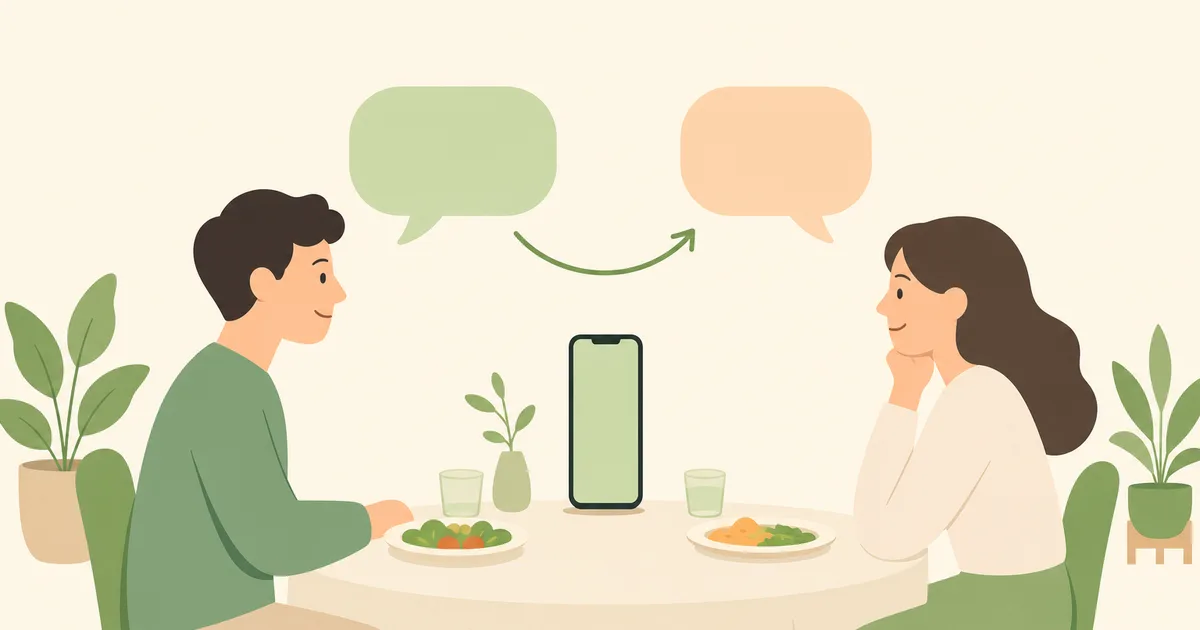
A conversation translator app is the tool for the moments that cannot wait until you are fluent: the first dinner with your partner's family in Seville, a doctor's appointment in Osaka, a date with someone whose language you started three weeks ago. You speak, the phone shows what you said and the translation, and reads it out to the other person; they answer in their language and the same happens the other way. Used carelessly, it produces long silences and odd sentences. Used well, it gets out of the way and the conversation feels like a conversation. Here is how to use one well, situation by situation, and how to make sure you need it less every month.
Key points
- One short sentence at a time, then a pause.
- Look at the person, not at the phone.
- Check the meaning of anything important: dates, numbers, medicine, names.
- Skip idioms and jokes and say the plain version.
- Afterwards, learn the words the conversation needed. That is how the translator becomes unnecessary.
How does a real-time conversation translator work?
Three steps happen in a second or two. The app recognises speech and turns it into text, translates the text, and reads the translation aloud. Each step can go wrong in its own way: a noisy room spoils recognition, a long sentence with three clauses confuses translation, and a name or a number can come out as a similar-sounding word. Knowing this explains almost every rule below. A good two-way voice translator also detects who is speaking, so you do not have to press a button for each language; a pause tells the app the sentence is over.
Before the conversation
Put the phone where both of you can see it, flat on the table between you, and agree on one rule: one person speaks, then waits for the translation. Learn three phrases by heart in the other language: hello, thank you and "one moment, please". They earn goodwill that no app can, and they show you are trying. If you are about to meet a family, the phrases for meeting your partner's Spanish-speaking parents are worth rehearsing in advance, and so are the phrases for meeting Japanese parents, where the formal greeting matters more than any sentence that follows.
During the conversation
- Speak in short sentences. One idea per sentence. A long sentence comes back as three guesses.
- Pause at the end. The pause tells the translator the sentence is over. Do not fill it with "um".
- Handle names and numbers with care. Say numbers slowly, and repeat a date, a time or a dose back to confirm it.
- Say the plain version. "It is raining heavily" translates well; a saying about the weather often does not.
- Check rather than assume. If an answer looks strange, ask again in other words. Most misunderstandings come from one wrong word, not from bad intent.
- Keep your eyes up. Read the translation, then look at the person while they hear it. The conversation is with them, not with the screen.
At the family dinner
A family dinner is the hardest test, because several people talk at once and nobody wants to wait. Let your partner sit next to you and take the translator only for the moments that matter: answering a question addressed to you, a toast, thanking the cook. Small talk can flow around you in their language, and that is fine. Prepare two or three stories in short sentences: how you met, what you do, where you grew up. The same questions come at every first dinner. If dinners like this are your everyday life rather than a single evening, living with a language barrier in a relationship covers the habits that make it easier. When your partner meets your own parents, the roles swap, and when your foreign partner meets your parents has advice for that evening.
On a date
On a date, the translator is a bridge, not the centre of the table. Use it for the things you really want to understand: plans, feelings, a story that matters to the other person. For the rest, try the words you have, laugh at the mistakes, and point at things. A phrasebook joke translated word for word rarely survives the trip; a simple, honest sentence usually does.
At the doctor or the pharmacy
This is where accuracy matters more than charm. Write down your symptoms, allergies and medicines in short sentences before the appointment. Ask for numbers twice: dose, times a day, number of days. If the translation of a medical word looks odd, ask the doctor to write it down or show it on the screen. For anything serious, ask whether an interpreter is available; a translator app is a help, not a substitute for a professional where health is at stake.
Two phones at a distance
Couples who live in different countries can use a translator over a distance as well: each person speaks into their own phone and reads the translation on their own screen. This works best for a planned conversation rather than a call that drifts for an hour. Agree on the topic, keep the rule of one speaker at a time, and keep the call short. A short weekly call with your partner's parents, even a translated one, does more for the relationship with them than a long visit once a year. For couples who live apart, a long-distance relationship in two languages has a schedule for the time difference and a weekly rhythm for learning each other's language.
After the conversation: from translating to speaking
Every conversation through a translator is a list of the words your life actually needs. Go through them the same day and keep the ones you will use again; review them on a schedule rather than rereading the list. This is the bridge from translating to speaking: once you know the words a family dinner needs, you start answering before the translation appears. When that begins, read how to stop translating in your head. To learn the language together, see learning a language with your partner, and before a trip, the phrases to learn first. If you are starting from zero, a plan for your first month in a new language shows how the first words turn into sentences.
The conversation translator in LinguaPair
The conversation translator in LinguaPair works in two ways. Side by side, on one phone: in the app the language of whoever is speaking is recognised automatically (in the browser you pick the two languages at the start), a pause ends the sentence and the microphone keeps listening. At a distance, on the two phones of a couple: each of you speaks into your own phone and reads the translation on your own screen, even from different countries; for this, both of you sign in, in the app or in the browser, and connect as a couple. The translation can be read aloud, and after the conversation a summary sends the new words to your vocabulary and your reviews. On an iPhone with iOS 18 or later, many phrases are translated on the phone itself; the rest needs the internet.
The first 10 minutes of every day are free. Premium removes the limit, and one subscription covers both partners. The translator covers all 12 languages of the app. It works in the browser at linguap.com, on a computer or a phone, Android included, and in the iPhone app; the Android app is coming. Where a browser cannot hear speech, you can type. To see it step by step, read how the conversation translator works.
Questions
Does the other person need the app?
Not for a conversation side by side: one phone is enough. For a conversation at a distance, both of you sign in, in the app or in the browser, and connect as a couple.
Is a conversation translator free?
In LinguaPair, 10 minutes a day are free. With Premium there is no daily limit, for both partners on one subscription.
Can I rely on a translator at the doctor?
For describing symptoms and understanding instructions, it helps a lot, if you speak in short sentences and confirm every number. For a diagnosis or treatment decision, ask for a professional interpreter.
Will using a translator stop me from learning?
Only if the words of the conversation disappear afterwards. Keep them, review them, and each conversation leaves you with a little more of the language.
To rehearse a conversation before it happens, try AI conversation practice.