 Lingua
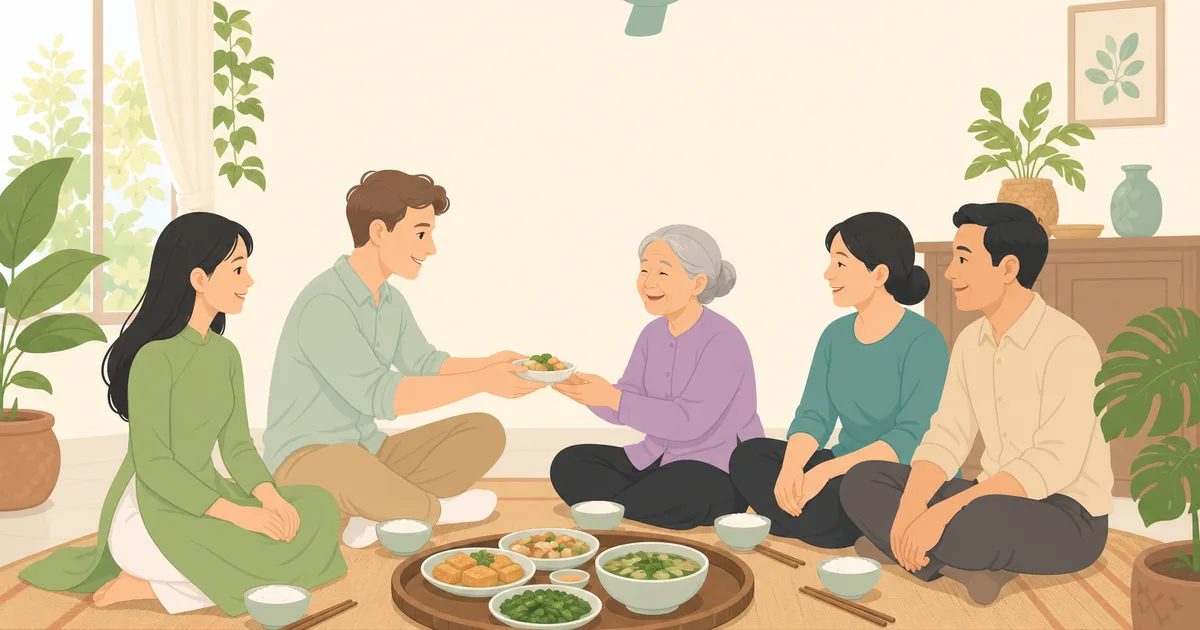
Meeting your partner's parents in Vietnam is usually a family meal at home, often with more relatives than you expected: grandparents, an aunt or two, cousins who came to have a look. The atmosphere is warm, the food keeps arriving, and the questions are direct. What Vietnamese parents notice first is not your grammar but your manners towards elders: how you greet them, how you call them and yourself, whether you invite them to eat before you start. Get those few things right in Vietnamese and you will have made a better impression than most fluent speakers.
Below are thirty phrases with a reading hint for English speakers, followed by the etiquette Vietnamese families take for granted, the differences between the North and the South, the most common mistakes and a two-week plan.
Key points
- Vietnamese has no neutral "you" and "I". You call the parents bác if they are older than your own parents, or cô (her) and chú (him) if they are younger, and you call yourself cháu. Both parents together are hai bác. Ask your partner which words the family expects.
- Add ạ at the end of a sentence to an elder. It is the word that makes Vietnamese polite, and it costs nothing.
- Before the meal, invite each elder to eat, starting with the oldest: Cháu mời hai bác ăn cơm ạ. Then wait until they pick up their chopsticks.
Before the visit
- Ask your partner about the pronouns. Some families, especially in the South, are happy for you to say con, the word a child uses, even before the wedding; others expect cháu until you are engaged. Getting this right is the single biggest compliment.
- Bring gifts for the family, not just the parents. Fruit, good tea, cakes, a bottle of wine or spirits for the father, or something from your own country are all safe. Hand them over with both hands. Avoid anything black or white as wrapping, and do not give handkerchiefs or knives.
- Dress neatly and modestly. Covered shoulders and knees show respect, especially if grandparents are there or the family has an ancestor altar.
- Expect to take your shoes off. Almost every Vietnamese home is shoes-off at the door.
The 30 phrases
Vietnamese is tonal: the same syllable means different things depending on the pitch. The hints below use English spelling and cannot show tones, so read them alongside the marks in the Vietnamese column. No mark is a level, mid tone; á rises; à falls low; ả dips and comes back up; ã rises with a break in the voice; ạ is short, low and cut off. The hints follow Hanoi pronunciation, where d, gi and r sound like "z"; in the South they sound like "y". "G" in the hints is the unaspirated k of c and k, "uh" is the Vietnamese ư and ơ, and a final "p", "t" or "k" is held without a puff of air. ○○ marks a name or a word to fill in.
Greetings and first words
| Vietnamese | Say it like | Meaning |
|---|---|---|
| Cháu chào hai bác ạ. | chow chow hai bahk a | Hello to you both. To one person: Cháu chào bác ạ. |
| Cháu tên là ○○. | chow ten la ○○ | My name is ○○. |
| Cháu rất vui được gặp hai bác. | chow zuht vooy duh-uhk gahp hai bahk | I'm very happy to meet you. |
| Cháu cảm ơn hai bác đã mời cháu. | chow gahm uhn hai bahk dah muh-y chow | Thank you for inviting me. |
| ○○ kể với cháu nhiều về hai bác lắm. | ○○ geh vuh-y chow nyew veh hai bahk lahm | ○○ has told me so much about you. |
| Năm nay cháu ○○ tuổi ạ. | nahm nai chow ○○ twoy a | I'm ○○ years old. They will ask, because age decides the pronouns. |
Polite forms and asking for help
| Vietnamese | Say it like | Meaning |
|---|---|---|
| Dạ. Vâng ạ. | zah. vuhng a | Yes, politely. Dạ is used everywhere, vâng mostly in the North. |
| Cháu có chút quà biếu hai bác. | chow gaw choot gwah bee-yew hai bahk | I've brought a small gift for you. |
| Cháu đang học tiếng Việt ạ. | chow dahng hawk tyeng vyet a | I'm learning Vietnamese. |
| Bác nói chậm một chút được không ạ? | bahk noy chuhm moht choot duh-uhk khohm a | Could you speak a little more slowly? |
| Xin lỗi bác, bác nói lại được không ạ? | sin loy bahk, bahk noy lai duh-uhk khohm a | Sorry, could you say that again? |
| Cái này tiếng Việt gọi là gì ạ? | gai nai tyeng vyet goy la zee a | What is this called in Vietnamese? |
At the table
| Vietnamese | Say it like | Meaning |
|---|---|---|
| Cháu mời hai bác ăn cơm ạ. | chow muh-y hai bahk ahn guhm a | Please, let's eat. The invitation before the meal, to each elder. |
| Món này ngon quá ạ! | mawn nai ngawn gwah a | This is delicious! |
| Bác nấu ăn ngon quá ạ! | bahk nuh-oo ahn ngawn gwah a | You're such a good cook! |
| Cháu xin thêm một chút ạ. | chow sin tem moht choot a | May I have a little more? |
| Cháu no rồi ạ, cháu cảm ơn bác. | chow naw zoy a, chow gahm uhn bahk | I'm full, thank you. |
| Cháu mời bác uống trà ạ. | chow muh-y bahk oo-uhng chah a | Please have some tea, as you pour it for them. |
| Cháu chúc hai bác sức khỏe! | chow chook hai bahk suhk khweh | To your health! The polite toast to parents. |
| Để cháu rửa bát giúp bác ạ. | deh chow zuh-uh baht zoop bahk a | Let me wash the dishes for you. In the South: rửa chén. |
Small talk
| Vietnamese | Say it like | Meaning |
|---|---|---|
| Cháu đến từ ○○. | chow den tuh ○○ | I'm from ○○. |
| Cháu làm nghề ○○ ạ. | chow lahm ngeh ○○ a | I work as a ○○. |
| Cháu rất thích món ăn Việt Nam. | chow zuht tick mawn ahn vyet nahm | I really love Vietnamese food. |
| Chúng cháu quen nhau ở ○○. | choom chow gwen nyow uh ○○ | We met in ○○. |
| Cháu thương ○○ thật lòng ạ. | chow tuh-uhng ○○ tuht lawng a | I truly care for ○○. Thương is the deep, family kind of love. |
Thanks and goodbye
| Vietnamese | Say it like | Meaning |
|---|---|---|
| Cháu cảm ơn hai bác về bữa cơm ạ. | chow gahm uhn hai bahk veh buh-uh guhm a | Thank you for the meal. |
| Hôm nay cháu rất vui ạ. | hohm nai chow zuht vooy a | I've had a wonderful time today. |
| Muộn rồi, cháu xin phép về ạ. | moo-uhn zoy, chow sin fep veh a | It's late, may I take my leave. Xin phép means asking permission. |
| Hôm khác cháu lại sang thăm hai bác. | hohm khahk chow lai sahng tahm hai bahk | I'll come and visit you again. |
| Cháu chào hai bác, hai bác giữ gìn sức khỏe ạ. | chow chow hai bahk, hai bahk zuh zin suhk khweh a | Goodbye, please look after your health. |
Etiquette Vietnamese families take for granted
- Greet the oldest first. If grandparents are there, greet them before the parents: Cháu chào ông bà ạ, grandfather and grandmother. A slight nod or bow of the head with the greeting is natural; a handshake is fine with the father if he offers it.
- Two hands for elders. Give and receive anything, a gift, a cup of tea, a glass, with both hands, or with your right hand while the left touches your right wrist.
- The invitation before eating. The youngest invite the oldest, one by one: Cháu mời ông bà ăn cơm, cháu mời hai bác ăn cơm. Only then does the meal start, with the eldest taking the first bite.
- Your bowl will be filled for you. The mother will put food in your bowl, again and again; it is affection. Eat what you can, praise it, and say Cháu no rồi ạ with a smile when you really cannot.
- Chopsticks. Never stand them upright in the rice, which is how rice is offered to the dead. Lay them across the bowl or on the rest.
- Drinking with the father. Beer or rice spirit may come out, with Một, hai, ba, dô!, the Vietnamese "one, two, three, cheers". Hold your glass lower than his when you clink. If you do not drink, say so early and kindly; a glass of tea raised for the toast is accepted.
- Questions that sound personal. Your age, your job, your salary, whether you own a flat, when you will marry and have children: in Vietnam these are signs of interest, not rudeness. Comments on your looks or weight are the same.
North and South
The North, with Hanoi, tends to be more formal: parents are bố mẹ, yes is vâng, a bowl is bát, and pronouns are watched more closely. The South, with Ho Chi Minh City, is often more relaxed: parents are ba má, yes is dạ, a bowl is chén, late is trễ instead of muộn, and to visit is qua instead of sang. The accents differ too, and many tones merge in the South. Central Vietnam, around Huế, has its own words and a strong accent. Learn the version your partner's family speaks, and do not worry about the rest.
Common mistakes
- Calling the parents anh, chị or bạn. These are for people your own age; to parents they sound almost rude. Stay with bác or cô and chú.
- Using tôi and em for yourself. Tôi sounds cold and distant in a family; em is for your partner. With the parents you are cháu.
- Ignoring the tones. Bác with a rising tone is the parent and bạc, with a low cut-off tone, is silver; ba is three, or dad in the South, and bà is grandmother. Your partner's family will understand you anyway, but a few well-placed tones are a delight to them.
- Starting to eat first or skipping the invitation before the meal.
- Saying no only once. A Vietnamese host offers again and again; refuse gently, smile, and accept a little in the end if you can.
- Touching heads or pointing with a finger. Point with an open hand, and leave children's heads alone, even affectionately.
A two-week practice plan
- Days 1–3: the doorway. Cháu chào hai bác ạ, Cháu tên là ○○, Cháu rất vui được gặp hai bác, with the right pronouns for your partner's family.
- Days 4–6: the table. Practise the invitation Cháu mời hai bác ăn cơm ạ before every real meal, plus Món này ngon quá ạ and Cháu no rồi ạ.
- Days 7–9: the questions. Prepare short answers about your age, your work, your family, your country and how you met. Your partner plays the parents and asks the direct questions.
- Days 10–12: the whole visit. From the greeting at the door to Muộn rồi, cháu xin phép về ạ, with tea poured for the elders.
- Days 13–14: polish. Fix one tone per phrase and choose the ten phrases you will definitely use.
How LinguaPair helps you get ready
LinguaPair is made for exactly this situation: each of you learning the other's language. You invite your partner and your two accounts become a pair: you follow your own Vietnamese course in short lessons, with the A0 and A1 levels free, and each of you sees the other's level and streak. Games against each other, translation duels and vocabulary races, are built from your words and turn the phrases above into a contest. On the day itself, the live translator works on one phone at the table: each person speaks their own language and every line is translated as you go, so you can answer the questions yourself instead of waiting for your partner to translate. The words from those conversations land in your vocabulary trainer for the next visit. Games and unlimited translation come with Premium, and one subscription covers both of you.
Compare the same visit elsewhere: meeting Korean parents, Japanese parents, German parents, French parents, Spanish-speaking parents, Italian parents and Brazilian parents. If a wedding is next, continue with a toast and vows in your partner's language, and for the first words of love, how to say I love you in 10 languages.
For a Russian-speaking family, see 30 phrases for meeting Russian parents; and if your foreign partner is the one meeting your parents, read which English phrases to teach them.